
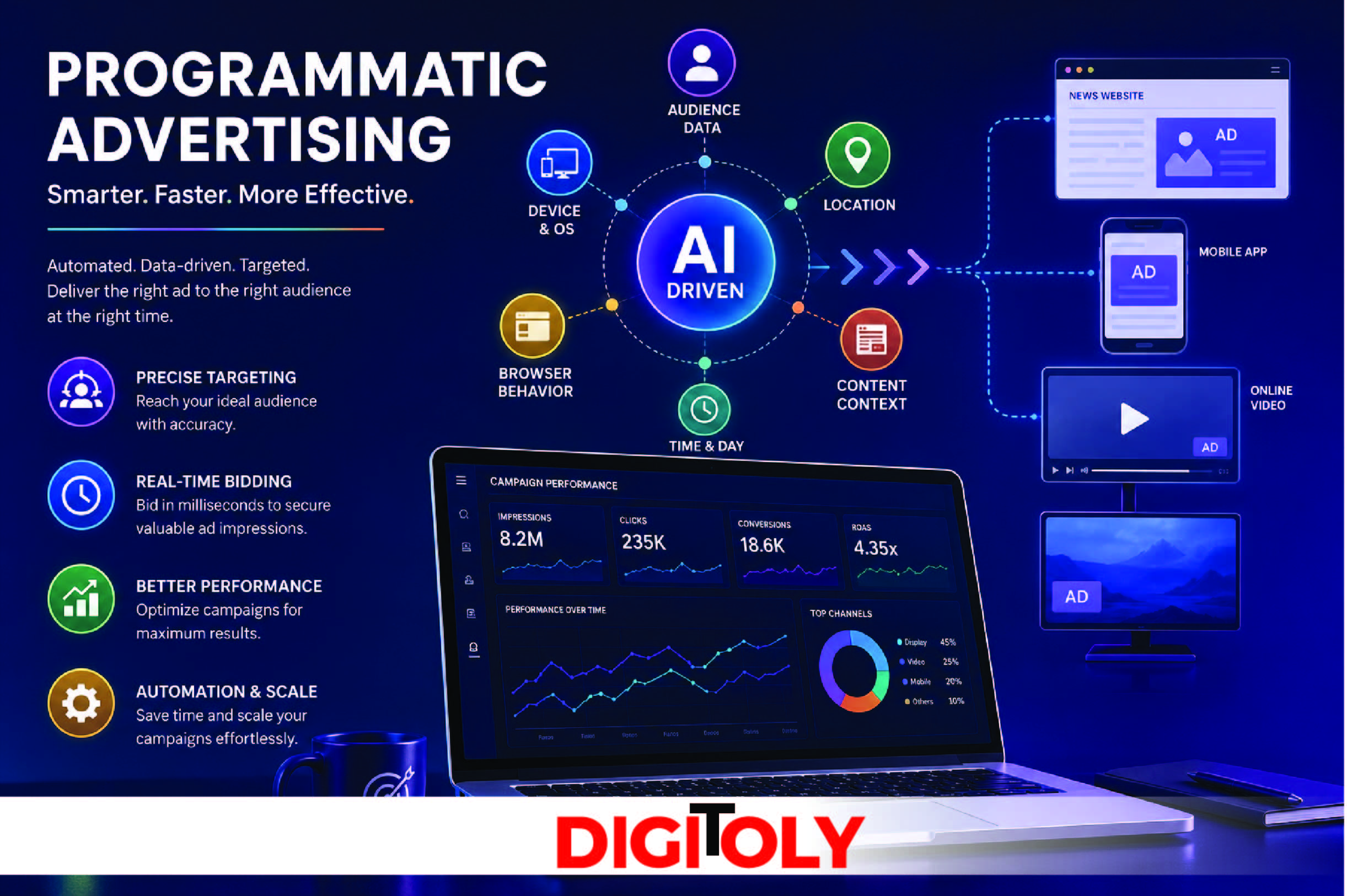
Digital advertising has changed rapidly over the past few years. Businesses now need faster, smarter, and more targeted advertising methods. Programmatic advertising helps businesses automate digital ad buying. It also helps brands reach relevant audiences across many online channels. Unlike traditional advertising, programmatic advertising uses technology for ad purchases. It can make advertising more efficient, measurable, and scalable.
However, programmatic advertising can seem complex at first. Understanding its process makes it much easier to use effectively. This guide explains programmatic advertising in simple terms. It covers how it works, its benefits, challenges, and best practices.
What is Programmatic Advertising?
Programmatic advertising is the automated buying and selling of digital ad space. It uses software and data to manage advertising transactions. Advertisers do not need to negotiate every ad placement manually. Instead, technology handles much of the buying process. The system considers several factors before displaying an advertisement. These factors include audience, location, device, context, and campaign goals.
For example, imagine someone visits a travel website. That visitor may see an advertisement for a hotel. The advertiser may have selected travelers within a specific location. The system evaluates whether that visitor matches the campaign. If the visitor matches, the advertiser can compete for that impression. The winning advertisement then appears on the webpage.
This entire process can happen within milliseconds. Programmatic advertising therefore combines automation, data, and advertising technology. It helps advertisers make decisions at a much larger scale.
How Does Programmatic Advertising Work?
Programmatic advertising involves several technologies and platforms. Each component plays an important role in the buying process. Here is a simplified version of the process.
- A User Visits a Website: First, someone visits a website or opens an application. The website has available advertising space. This space is known as an ad impression opportunity. The website sends information about the available impression. This information can include device type and page context.
- The Ad Opportunity Enters an Auction: The advertising opportunity reaches an ad exchange or supply-side platform. Several advertisers may want that same impression. Their platforms can evaluate the opportunity automatically. Each advertiser uses predefined campaign rules and targeting requirements.
- Advertisers Compete for the Impression: Demand-side platforms evaluate the available impression. They consider factors such as:
-
- Audience characteristics
- Campaign objectives
- Available budget
- Ad placement
- Device type
- Location
- Previous user interactions
- Context
- The platform determines how valuable the impression is.
-
- The Winning Ad Appears: The selected advertisement is delivered to the website or application. The entire process usually happens extremely quickly. Users therefore see advertisements without noticing the underlying process. This automation makes programmatic advertising highly scalable.
What Are the Main Types of Programmatic Advertising?
Programmatic advertising includes several buying methods. Understanding these methods helps advertisers choose suitable strategies.
Programmatic Real-Time Bidding
Real-time bidding is one of the most common programmatic methods. Advertisers compete for individual ad impressions through automated auctions. The auction happens when an available impression appears. Advertisers can set maximum bids and targeting conditions. This method offers flexibility and efficient audience targeting.
Programmatic Direct
Programmatic direct involves automated transactions between advertisers and publishers. The advertiser usually agrees on specific inventory or pricing. The technology then automates campaign delivery and management. This approach can provide more predictable placements.
Private Marketplace
A private marketplace provides selected advertisers access to specific inventory. Publishers usually invite approved advertisers to participate. This model offers greater control over where advertisements appear. It can also provide access to premium advertising inventory.
Guaranteed Programmatic Buying
Programmatic guaranteed buying combines automation with guaranteed inventory. The advertiser and publisher agree on specific terms. The advertiser receives a predetermined amount of advertising inventory. This method can provide stronger control over placements and delivery.
What is a Demand-Side Platform?
A demand-side platform helps advertisers purchase digital advertising automatically. Advertisers use these platforms to manage campaigns from one interface. A DSP can connect with multiple advertising exchanges and publishers. It can also evaluate impressions based on campaign requirements. Advertisers can define targeting, budgets, bids, and campaign goals. The platform then uses those instructions during ad buying. This process reduces the need for manual media buying.
What is a Supply-Side Platform?
A supply-side platform helps publishers sell advertising inventory. Publishers use SSPs to manage available ad space. The platform connects publishers with potential advertisers. It can also help publishers maximize advertising revenue. An SSP may send available impressions to several demand-side platforms. Advertisers then compete for those opportunities. Together, DSPs and SSPs help connect buyers and sellers.
What is an Ad Exchange?
An ad exchange is a digital marketplace for advertising inventory. It connects advertisers with publishers through automated transactions. Advertisers can access many available impressions through these marketplaces. Publishers can also reach more potential buyers. Ad exchanges therefore support efficient digital advertising transactions.
Why is Programmatic Advertising Important?
Modern audiences use many digital platforms every day. They browse websites, watch videos, use applications, and stream content. Advertisers need ways to reach these audiences across multiple environments. Programmatic advertising helps manage this complexity. It allows businesses to automate large advertising campaigns. It also provides greater opportunities for audience-based targeting. Furthermore, advertisers can monitor campaign performance continuously. They can adjust campaigns based on actual results. This makes programmatic advertising valuable for many businesses.
Benefits of Programmatic Advertising
Programmatic advertising offers several important advantages.
Better Audience Targeting
Programmatic platforms can use different targeting signals. These signals help advertisers reach audiences that match campaign goals. Advertisers can target audiences based on various factors. These may include location, device, interests, and browsing behavior. However, businesses must follow applicable privacy requirements. Responsible targeting protects users while supporting campaign performance.
Greater Efficiency
Automation reduces many manual advertising tasks. Advertisers can manage campaigns through centralized platforms. They can also automate bidding and budget allocation. This saves time for marketing teams. It allows teams to focus more on strategy and creative development.
Wider Reach
Programmatic advertising can reach audiences across many digital environments. These environments include websites, applications, videos, and connected devices. Businesses can therefore expand their campaigns beyond individual websites. This wider reach can support stronger brand visibility.
Improved Measurement
Programmatic campaigns provide detailed performance data. Advertisers can monitor impressions, clicks, conversions, and other metrics. They can compare results across audiences and placements. These insights help businesses make informed marketing decisions.
Real-Time Optimization
Advertisers do not need to wait until campaign completion. They can review performance while campaigns are still running. They can then adjust bids, audiences, placements, or budgets. This flexibility can improve campaign efficiency.
Scalable Campaign Management
Programmatic advertising supports campaigns of different sizes. Small businesses can manage focused campaigns. Large brands can manage campaigns across multiple markets. Automation makes scaling much easier.
Programmatic Advertising vs Traditional Advertising
Traditional advertising often requires more manual planning. Advertisers may negotiate placements and pricing directly with publishers. Programmatic advertising uses technology to automate these processes. The biggest difference involves how advertising inventory gets purchased. Traditional buying often depends heavily on direct relationships. Programmatic buying relies more heavily on software and data.
However, programmatic advertising does not replace strategy. Strong campaigns still require experienced marketers. Creative quality, positioning, messaging, and planning remain important. Technology simply makes the buying process more efficient.
What is Programmatic Advertising Used For?
Businesses use programmatic advertising for many marketing objectives.
Brand Awareness
Brands can reach large audiences through display and video advertising. This can increase visibility among relevant consumers.
Website Traffic
Advertisers can encourage audiences to visit their websites. Relevant targeting can help attract more qualified visitors.
Lead Generation
Businesses can promote forms, offers, and valuable resources. Programmatic campaigns can reach audiences likely to show interest.
E-commerce Sales
Online retailers can promote products to relevant audiences. Retargeting can also reconnect with previous website visitors.
App Promotion
Businesses can use programmatic advertising to promote mobile applications. Campaigns can target users across relevant digital environments.
What is Retargeting in Programmatic Advertising?
Retargeting shows advertisements to people who previously interacted with a business. For example, someone may visit an online store. They browse a product but leave without making a purchase. A retargeting campaign may later show that product again. This strategy can remind users about products they considered. However, retargeting requires careful frequency management. Showing the same advertisement too often can frustrate users. Advertisers should therefore use reasonable frequency limits.
Common Programmatic Advertising Formats
Programmatic advertising supports several creative formats.
Display Ads
Display ads appear across websites and applications. They can include images, animations, and interactive elements.
Video Ads
Video advertising can appear before, during, or after video content. It can also appear within websites and applications.
Native Advertising
Native ads match the surrounding content more closely. They usually provide a less disruptive user experience.
Connected TV Advertising
Programmatic technology can support advertising across connected television environments. This allows brands to reach streaming audiences.
Audio Advertising
Programmatic audio can reach audiences through digital music and podcast platforms. It provides another opportunity to reach consumers beyond display advertising.
Key Programmatic Advertising Metrics
Measuring performance is essential for successful campaigns. Advertisers should choose metrics based on campaign objectives.
Impressions
Impressions show how many times an advertisement appeared. This metric helps measure campaign reach.
Click-Through Rate
CTR measures how often people clicked an advertisement. A higher CTR can indicate stronger audience engagement. However, CTR should not be viewed alone.
Conversion Rate
Conversion rate measures completed desired actions. These actions can include purchases, registrations, or form submissions.
Cost Per Acquisition
CPA measures the cost of gaining a conversion. It helps advertisers understand acquisition efficiency.
Return on Ad Spend
ROAS compares advertising revenue with advertising costs. This metric can help evaluate campaign profitability.
Common Challenges in Programmatic Advertising
Programmatic advertising offers many benefits. However, businesses must manage several potential challenges.
Ad Fraud
Ad fraud can create fake impressions or clicks. It can waste advertising budgets and reduce campaign accuracy. Advertisers should therefore use trusted technology partners. They should also monitor unusual traffic and performance patterns.
Brand Safety
An advertisement can sometimes appear beside unsuitable content. This can damage a brand’s reputation. Advertisers should use brand safety tools and appropriate exclusions. Regular placement reviews can also improve campaign safety.
Privacy Concerns
Digital advertising increasingly requires responsible data practices. Businesses must respect applicable privacy laws and platform requirements. They should understand how their advertising partners collect and use data. Transparency also helps build audience trust.
Viewability Issues
An advertisement may technically load without being meaningfully viewed. Low viewability can reduce campaign effectiveness. Advertisers should monitor viewability alongside other performance metrics.
Excessive Ad Frequency
Users may see the same advertisement repeatedly. This can create ad fatigue. Frequency controls can help prevent this problem.
Best Practices for Programmatic Advertising
A successful campaign requires more than automated buying. Businesses should combine technology with strong marketing strategy.
Define Clear Goals
Start by defining the campaign’s primary objective. Do you want awareness, traffic, leads, or sales? Clear goals make campaign measurement easier.
Understand Your Audience
Build audience segments around meaningful customer characteristics. Avoid targeting users simply because large audiences seem attractive. Relevance often matters more than volume.
Use Strong Creative
Your advertisement needs to capture attention quickly. Use simple messages and clear calls to action. Make sure creative assets match the target audience.
Set Appropriate Frequency Limits
Avoid showing identical advertisements too frequently. Use frequency controls to create a better user experience.
Monitor Performance Regularly
Review campaign results consistently. Look for strong and weak audience segments. Then adjust your strategy based on reliable data.
Test Different Approaches
Test different creative assets, audiences, and bidding strategies. However, change one major variable at a time. This makes performance comparisons more meaningful.
Prioritize Quality Inventory
Cheap impressions do not always deliver strong results. Focus on relevant, viewable, and trustworthy advertising environments. Quality often creates better long-term campaign value.
The Future of Programmatic Advertising
Programmatic advertising will continue evolving with digital technology. Privacy changes will influence how advertisers use audience data. Contextual targeting will therefore remain increasingly important. Artificial intelligence will also influence campaign optimization. Automation may help advertisers identify valuable opportunities more efficiently. Connected television and digital audio will also create new opportunities. Businesses will need to balance automation with human oversight. Technology can process large amounts of information quickly. However, people still provide strategy, creativity, and judgment. The strongest campaigns will combine both strengths.
How Can DIGITOLY Help With Digital Advertising?
Programmatic advertising requires the right strategy and technology. It also requires continuous monitoring and thoughtful optimization. That process can become challenging for growing businesses. DIGITOLY can help businesses build stronger digital marketing strategies. The right approach starts with understanding your audience and goals. Then, marketers can select suitable channels and campaign tactics. DIGITOLY can support businesses across their broader digital marketing needs. Its expertise can help create more focused and effective campaigns. A strong digital strategy should also connect different marketing channels.
Programmatic advertising can work alongside social media and content marketing. Pinterest can also support visual discovery and long-term brand visibility. Therefore, businesses should avoid treating each channel separately. An integrated strategy can create a more consistent customer journey.
Final Thoughts
Programmatic advertising has transformed how businesses buy digital advertising. t uses automation, data, and technology to improve advertising efficiency. Businesses can reach relevant audiences across many digital environments. They can also measure campaigns and optimize performance more effectively. However, successful programmatic advertising requires more than automation. Brands need clear goals, strong creative, responsible targeting, and regular optimization. They must also prioritize privacy, brand safety, and quality inventory. When used correctly, programmatic advertising can support many marketing objectives. It can help businesses increase awareness, generate leads, and drive sales. The right digital partner can make this process much easier.
Ready to strengthen your digital marketing strategy? Hire DIGITOLY today.
Get expert support for programmatic advertising, Pinterest, and broader digital marketing needs. Let DIGITOLY help your brand reach the right audience with greater confidence.

