
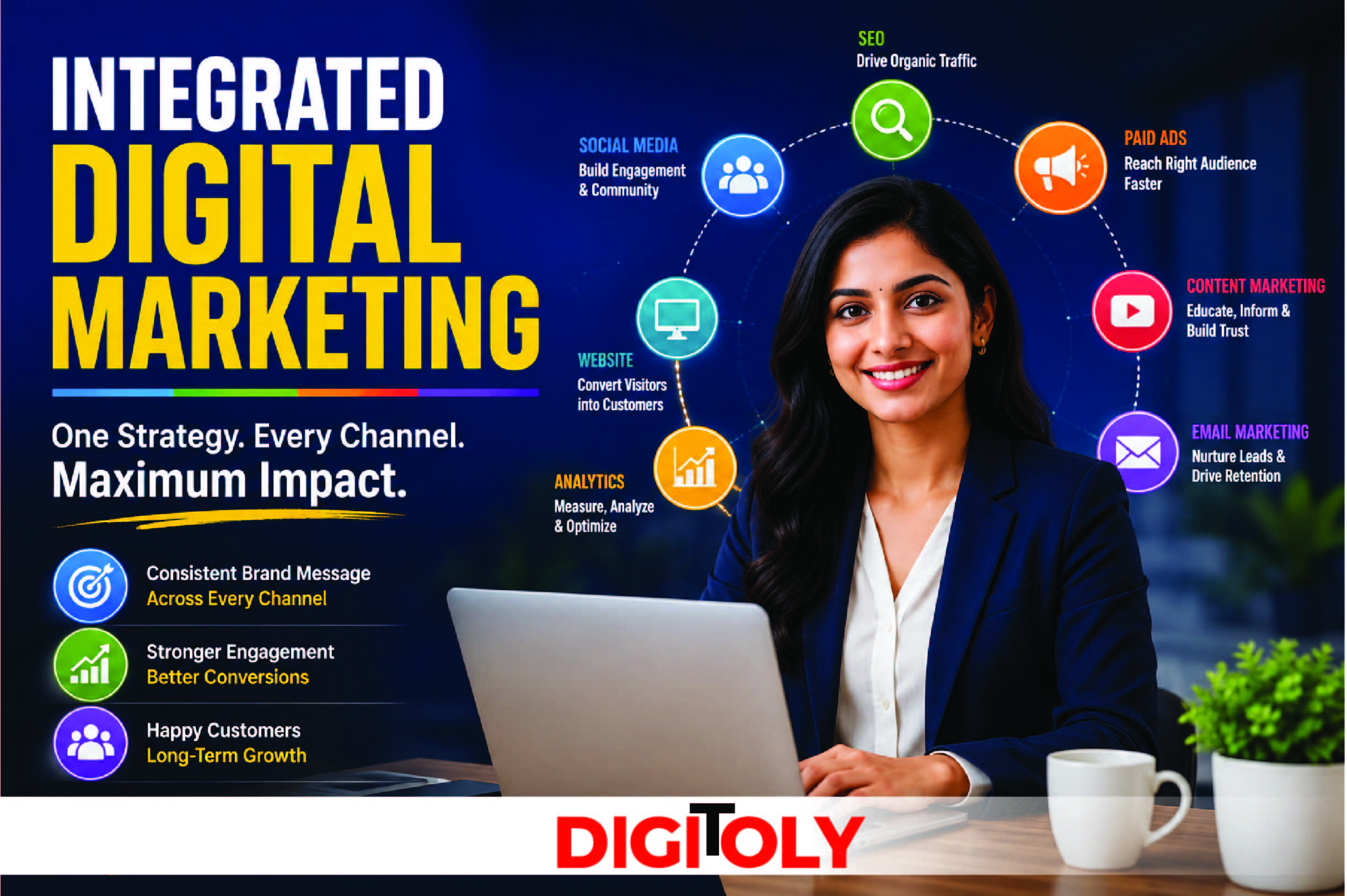
Digital marketing has changed how businesses reach and serve their customers. Today, people use many digital channels before making buying decisions. They may discover a brand through Google. They may also see its social media content. Later, they might watch a video or read customer reviews. They could then visit the website before contacting the business. This journey creates a challenge for businesses. Every digital channel must work together to create one clear experience. That is where integrated digital marketing becomes important.
Integrated digital marketing connects different marketing channels into one coordinated strategy. It helps businesses deliver consistent messages across the customer journey. This approach can improve visibility, engagement, trust, leads, and conversions. It also helps businesses use their marketing budgets more effectively. In this guide, we explain integrated digital marketing in simple terms. We also cover its benefits, channels, process, examples, and best practices.
What is Integrated Digital Marketing?
Integrated digital marketing is a strategy that connects multiple digital marketing activities. These activities work together toward shared business goals.
These channels can include:
- Search engine optimization (SEO)
- Search engine marketing (SEM)
- Social media marketing
- Content marketing
- Email marketing
- Influencer marketing
- Video marketing
- Online reputation management
- Website marketing
- Conversion rate optimization
- Paid advertising
- Marketing analytics
Instead of managing each channel separately, businesses connect their efforts. For example, a business can publish a detailed blog about a customer problem. SEO can help that blog reach people through search engines. The same topic can become social media content. It can also become an email newsletter. A short video can explain the same idea. Paid ads can then promote the most useful content. Therefore, one campaign can support several marketing channels. This creates a connected digital marketing ecosystem.
Why is Integrated Digital Marketing Important?
Customers rarely follow one straight path online. Their buying journey often includes several interactions with a brand. A customer may first discover a business through search. Then, they may check its social media profiles. Next, they may read reviews and visit the website. They might also compare competitors before deciding. This process can take days or even months. The experience should remain consistent throughout that journey. Integrated digital marketing helps achieve that consistency.
It connects marketing channels around the customer rather than the platform. Each channel supports the same broader marketing objective. As a result, businesses can create stronger customer experiences.
It Builds Brand Consistency
Consistent branding helps people recognize a business. It also makes a brand appear more professional and reliable. Your logo, colors, tone, messages, and values should remain consistent. However, each channel can still use its own format. For example, LinkedIn content can sound professional and informative. Instagram content can feel more visual and conversational. Both channels should still communicate the same brand identity.
It Improves Customer Experience
Customers want useful and relevant information. They do not want confusing messages from the same company. Integrated marketing creates a smoother experience across channels. It helps customers find consistent information wherever they interact. That consistency can increase confidence in the brand.
It Supports Better Marketing Decisions
Integrated marketing brings data from different channels together. This gives businesses a broader view of marketing performance. For example, website traffic alone does not show the entire customer journey. You can also study search visibility, social engagement, leads, conversions, and customer behavior. These insights support better marketing decisions.
Key Elements of Integrated Digital Marketing
An effective strategy combines several important digital marketing activities. Each channel should have a clear role.
- Search Engine Optimization: SEO helps businesses improve their organic search visibility. It focuses on creating useful experiences for search users. A strong SEO strategy includes several areas. These include keyword research, technical SEO, on-page optimization, content, and link development. SEO can attract people who are actively searching for relevant solutions. It also supports long-term visibility when done consistently.
- Content Marketing: Content marketing provides useful information to a target audience. It can include blogs, guides, case studies, videos, and more. Good content should answer real customer questions. It should also demonstrate genuine knowledge of the subject. Content can support every stage of the buying journey. For example, educational content can attract new audiences. Comparison content can help people evaluate their options. Case studies can provide evidence for customers closer to purchase.
- Social Media Marketing: Social media helps businesses communicate directly with their audiences. It can also increase brand awareness and community engagement. Different platforms attract different audiences and behaviors. Therefore, businesses should choose platforms based on their customers. They should not simply use every available platform. Social content can also support SEO and content marketing efforts. For example, a new blog can become several social media posts.
- Paid Digital Advertising: Paid advertising can provide faster visibility than organic marketing. Common formats include search ads, display ads, social ads, and video ads. Paid campaigns should support broader marketing goals. They should also connect with landing pages and useful content. A paid advertisement should never make a promise that the landing page cannot support.
- Email Marketing: Email marketing helps businesses maintain relationships with existing audiences. It can support lead nurturing, customer education, promotions, and retention. Email campaigns become stronger when they use relevant customer information. For example, businesses can send different messages to new leads and existing customers.
- Website and Conversion Optimization: Your website often becomes the center of your digital marketing strategy. All major channels can send users to the website. Therefore, the website must provide a clear and useful experience. Pages should load quickly and work well on different devices. Calls to action should also be clear and easy to understand. Conversion optimization focuses on improving the percentage of visitors who take desired actions. These actions can include enquiries, purchases, registrations, or calls.
How Does Integrated Digital Marketing Work?
Integrated digital marketing starts with a shared goal. The goal could be increasing qualified leads. It could also involve improving sales or growing brand awareness. Next, marketers identify the target audience. They study customer needs, challenges, interests, and online behavior. This information helps determine the best marketing channels. The team then creates a central message.
That message becomes the foundation for different marketing activities. Each channel adapts the message to its audience and format. For example, a long-form article can become a social media carousel. It can also become an email campaign or video script. The campaign then collects performance data. Marketers study the results and identify areas for improvement.
This creates a continuous cycle:
Research → Strategy → Content → Distribution → Measurement → Optimization
This cycle helps businesses improve their marketing over time.
Integrated Digital Marketing vs Traditional Digital Marketing
Traditional digital marketing often treats channels as separate activities. For example, one team may manage SEO. Another team may manage social media. A separate team may handle paid advertising. Each team can achieve individual targets. However, their efforts may not support one shared strategy. Integrated digital marketing takes a different approach. It connects channels around common goals and customer needs.
Consider a product launch as an example. An integrated campaign may begin with SEO content. Social media can create awareness around the same topic. Email can nurture interested customers. Paid ads can reach specific audience segments. The website can then convert those visitors. Each channel supports another channel. That is the main difference.
Benefits of Integrated Digital Marketing
Integrated digital marketing offers several important advantages.
Stronger Brand Recognition
Customers see consistent messages across different platforms. This repeated exposure can improve brand recognition.
Better Audience Engagement
Relevant content can reach customers through their preferred channels. This increases opportunities for meaningful interactions.
Improved Marketing Efficiency
Teams can reuse valuable content across multiple channels. This reduces unnecessary duplication. For example, one research report can create many content assets.
More Effective Lead Generation
Different channels can attract customers at different stages. SEO can attract organic visitors. Paid advertising can reach specific audiences. Email can nurture leads until they become ready to act.
Better Customer Retention
Integrated communication does not stop after a purchase. Businesses can continue providing useful information after conversion. This can strengthen customer relationships and encourage repeat business.
Clearer Performance Insights
Connected reporting provides a more complete view of marketing performance. Teams can identify which channels contribute to business outcomes. They can then invest more strategically.
How to Create an Integrated Digital Marketing Strategy
Creating an integrated strategy requires planning. Follow these practical steps.
Step 1: Define Your Business Goals
Start with specific and measurable objectives. Your goals might include more leads, sales, website traffic, or brand awareness. Avoid setting vague goals like “increase digital presence.” A clear goal gives every marketing activity a purpose.
Step 2: Understand Your Audience
Identify who you want to reach. Study their needs, challenges, questions, and buying behavior. Create customer personas when useful. However, avoid making assumptions without supporting evidence. Use customer conversations, analytics, surveys, and market research.
Step 3: Study Your Existing Marketing
Review your current digital channels. Check your website, SEO, social media, email, and advertising activities. Identify what works and what needs improvement. This audit can reveal gaps between different channels.
Step 4: Build a Unified Message
Create a clear brand message for your campaign. The message should reflect your audience’s needs and your business value. Then adapt that message for every channel. Keep the core idea consistent.
Step 5: Select the Right Channels
Do not choose channels simply because competitors use them. Select channels based on your audience and goals. A B2B company may benefit strongly from LinkedIn and search marketing. A visual consumer brand may benefit from social media and video. The right mix depends on your business.
Step 6: Create Connected Content
Develop content that supports the entire customer journey. Start with core content assets. Then adapt them for different platforms. For example, a detailed guide can become several smaller pieces. This approach saves resources while maintaining consistency.
Step 7: Launch and Coordinate Campaigns
Coordinate your marketing activities around shared timelines. Your SEO content, social posts, emails, and paid ads should support each other. Use campaign calendars to keep teams aligned.
Step 8: Track the Right Metrics
Do not measure success using traffic alone. Track metrics that connect with business goals.
These can include:
- Organic traffic
- Qualified leads
- Conversion rate
- Cost per lead
- Customer acquisition cost
- Return on advertising spend
- Email engagement
- Social engagement
- Revenue
- Customer retention
Choose metrics that help you make better decisions.
Step 9: Test and Improve
Digital marketing requires continuous improvement. Test different messages, content formats, audiences, and landing pages. Review results regularly. Then improve campaigns based on reliable data.
Example of an Integrated Digital Marketing Campaign
Imagine a company launching a new business software product. The company starts by researching customer problems and search behavior. Its SEO team creates helpful content around those problems. The content team publishes guides and comparison articles. The social team shares key insights from those articles. The company also creates short educational videos. Paid ads reach relevant audiences and promote useful resources.
Interested visitors reach dedicated landing pages. They can download a guide by submitting their contact details. The sales team receives qualified leads. Email campaigns then provide additional educational content. Finally, analytics shows which channels generate qualified customers. The company can then improve its marketing investment. This example shows how channels can work together.
Common Integrated Digital Marketing Mistakes
Even strong strategies can fail without proper execution. Here are some common mistakes to avoid.
Treating Channels as Separate
Disconnected campaigns can create inconsistent customer experiences. Always connect your campaigns through shared goals and messaging.
Focusing Only on Vanity Metrics
Likes and impressions can provide useful insights. However, they do not always represent business success. Focus on meaningful outcomes.
Publishing Without a Strategy
More content does not automatically create better results. Every piece should have a clear purpose.
Ignoring Customer Experience
Marketing can attract visitors. However, poor experiences can lose them. Review your website, forms, landing pages, and communication regularly.
Using Every Digital Channel
More channels do not always mean better marketing. Focus your resources on channels that support your goals.
Expecting Instant Results
Some marketing activities require time. SEO, content marketing, and brand building often need consistent effort. Paid advertising can provide faster feedback. However, it still requires testing and optimization.
Best Practices for Integrated Digital Marketing
Keep your customer at the center of every decision. Create one clear strategy before launching individual campaigns. Maintain consistent brand messaging across channels. Use data to understand customer behavior. Connect marketing activities with measurable business goals. Repurpose valuable content across relevant platforms. Keep your website fast, accessible, and easy to navigate.
Review campaign performance regularly. Test important assumptions instead of relying on guesses. Most importantly, focus on providing genuine value. Helpful marketing builds stronger relationships than aggressive promotion.
The Role of Data and Analytics
Data plays an important role in integrated digital marketing. It helps marketers understand what customers do after seeing campaigns. For example, an advertisement may generate many clicks. However, those clicks may not generate qualified leads. Analytics can reveal this difference. Businesses can then improve targeting, messaging, landing pages, and budgets. However, data should always be interpreted carefully.
A single metric rarely explains the entire customer journey. Integrated reporting provides more context. It helps marketers understand how channels influence each other. Businesses should also respect privacy and follow applicable data protection requirements. Trust is essential for long-term digital marketing success.
Why Businesses Need Integrated Digital Marketing Today
Customers have more choices than ever before. They can compare brands, prices, reviews, and experiences within minutes. Therefore, businesses must provide useful information at every stage. They also need consistent experiences across digital touchpoints. Integrated digital marketing makes this possible. It combines strategy, creativity, technology, data, and customer understanding. Most importantly, it turns individual marketing activities into one connected system. This approach can help businesses compete more effectively in crowded markets.
Frequently Asked Questions
What is integrated digital marketing?
Integrated digital marketing connects multiple digital channels into one strategy. It aligns SEO, content, social media, email, advertising, and other activities.
Why is integrated digital marketing important?
It creates consistent customer experiences across digital channels. It can also improve marketing efficiency, engagement, leads, and conversions.
Is integrated digital marketing suitable for small businesses?
Yes, small businesses can benefit from integrated marketing. They can start with a few channels that match their audience. The strategy can then grow as the business grows.
How long does integrated digital marketing take to show results?
Results depend on your goals, industry, competition, and chosen channels. Paid campaigns may provide faster feedback. SEO and content marketing often require consistent long-term effort.
What is the most important part of integrated digital marketing?
The customer should remain at the center of the strategy. Every channel should support customer needs and business objectives.
How can a digital marketing agency help?
An experienced agency can plan, execute, measure, and improve integrated campaigns. It can also coordinate multiple channels under one marketing strategy.
Final Thoughts
Integrated digital marketing is more than using several marketing channels. It is about making those channels work together. A successful strategy connects your audience, message, content, technology, and data. It also creates a consistent experience throughout the customer journey. However, successful integration requires expertise and continuous optimization. That is where the right digital marketing partner can make a difference.
Digitoly can help businesses build stronger digital marketing and branding strategies. From SEO and content to social media and paid campaigns, your channels need direction. A connected strategy can help turn digital activity into meaningful business growth. If you want to strengthen your online presence, hire Digitoly for your digital marketing and branding needs. Let Digitoly help you create a connected strategy that supports your business goals. Start building a stronger digital brand with Digitoly today.

