
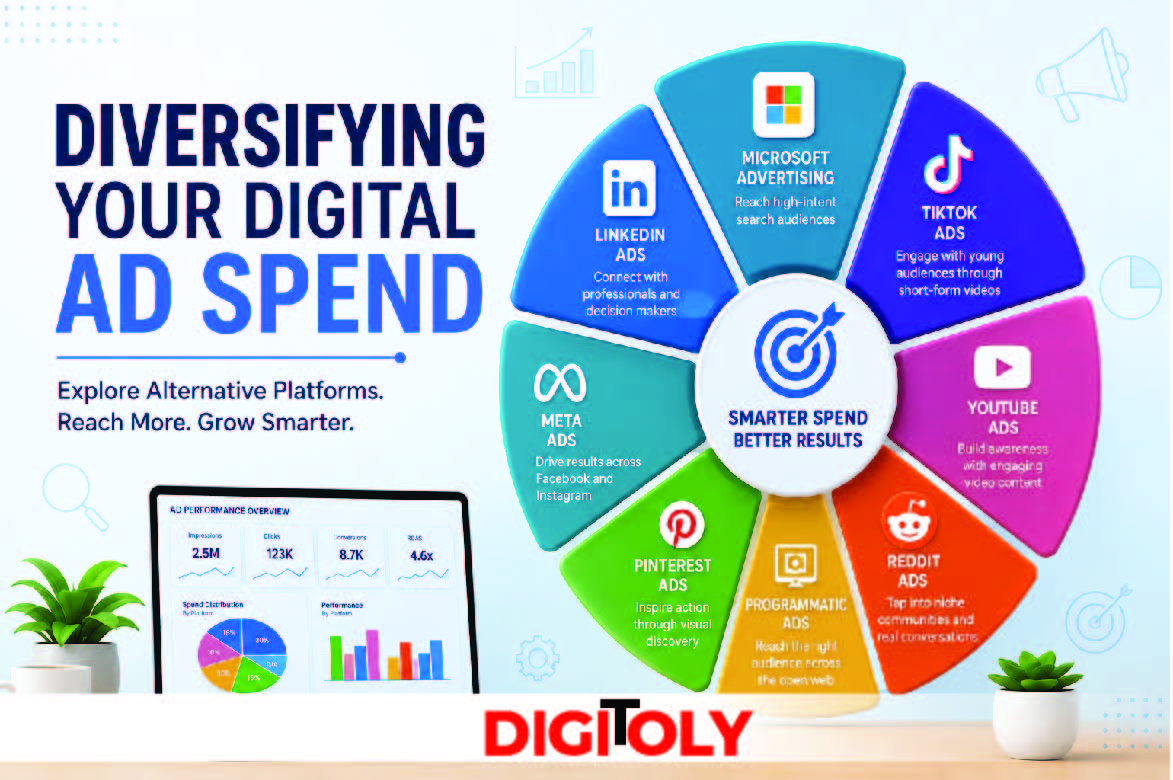
Digital advertising has changed how brands reach potential customers. Today, businesses have many platforms beyond traditional search advertising. This creates new opportunities for growth, awareness, and customer engagement. However, choosing the right advertising platform can feel difficult. Every platform has different audiences, formats, costs, and targeting options. Therefore, businesses need a clear strategy before moving their budget. Diversifying your digital ad spend can make your marketing more resilient. It can also help you discover new growth opportunities. Most importantly, diversification should support your business goals. This guide explores alternative advertising platforms and their benefits. It also explains how to build a smarter advertising mix.
What Does Diversifying Digital Ad Spend Mean?
Digital ad spend means money invested in online advertising. Businesses use this money to attract visitors, leads, or customers. Many businesses depend heavily on one advertising platform. That approach can create unnecessary risks over time. Platform costs, competition, policies, and audience behavior can change. Your campaign performance can also decline without warning.
Diversification means spreading your advertising budget across suitable platforms. It does not mean using every platform available. Instead, choose platforms that match your audience and goals. For example, B2B brands may explore LinkedIn advertising. Visual brands may benefit from Pinterest or Instagram campaigns. Likewise, businesses can explore Reddit, Microsoft Advertising, TikTok, and others. Each platform can serve a different role within your strategy.
Why Should Businesses Diversify Their Digital Advertising?
A diversified Digital Ad Spend strategy offers several important advantages.
- Reduce Platform Dependency: Relying on one platform can expose your business to risk. A sudden change can affect your campaign performance. Platform algorithms can change frequently. Advertising costs can also increase as competition grows. Diversification gives your business more options. If one channel weakens, another channel can support growth. However, diversification should never become random spending. Each channel needs clear goals and performance benchmarks.
- Reach Different Audiences: People do not use every platform in the same way. Their needs and behaviors also differ across digital channels. Some users actively search for solutions. Others discover products while browsing social content. Some audiences prefer professional communities and industry discussions. Others respond better to visual inspiration or short videos. Therefore, different platforms can reach different audience segments. This creates more opportunities to introduce your brand.
- Discover New Growth Opportunities: Your existing platform may not reach everyone. Alternative advertising platforms can uncover untapped audiences. A new platform can also reveal valuable customer insights. You may discover different interests, behaviors, and content preferences. These insights can improve your broader marketing strategy. They can also influence your messaging and creative approach.
- Improve Your Marketing Resilience: A strong marketing strategy should adapt to market changes. Diversification can make your advertising efforts more flexible. It provides multiple channels for reaching potential customers. This matters during changing economic and competitive conditions. However, resilience requires more than adding new platforms. You also need accurate tracking and regular campaign reviews.
Alternative Advertising Platforms Worth Exploring
There is no universal advertising platform for every business. The right choice depends on your audience and objectives. Below are several options worth considering.
Microsoft Advertising
Microsoft Advertising can complement traditional search advertising. It allows businesses to reach people through Microsoft’s search ecosystem. Search advertising works well for high-intent users. These users are already looking for specific products or services. This makes search platforms useful for lead generation. They can also support ecommerce and local business campaigns.
Microsoft Advertising may suit businesses targeting search-driven audiences. It can provide another channel beyond a single search network. However, businesses should compare performance rather than assume results. Test your campaigns with controlled budgets before increasing investment.
LinkedIn Advertising
LinkedIn is particularly useful for B2B marketing campaigns. Its professional environment supports business-focused audience targeting. Businesses can promote services, software, events, and industry content. They can also target professional audiences based on relevant attributes. This makes LinkedIn useful for account-based marketing strategies. It can also support demand generation and brand awareness.
However, B2B advertisers should focus on quality over volume. A large number of clicks may not create valuable leads. Instead, track qualified leads and pipeline contribution. This approach provides a better view of campaign effectiveness.
Reddit Advertising
Reddit offers access to communities built around specific interests. Users often gather around topics, industries, hobbies, and experiences. This creates opportunities for highly relevant advertising. Brands can connect with audiences around meaningful conversations. However, Reddit requires a careful approach. Users may reject content that feels overly promotional. Therefore, advertisers should understand community interests before launching campaigns. Creative content should feel useful, relevant, and authentic. Reddit has also strengthened its advertising technology in recent years. Its advertising business continues to develop AI-powered campaign features.
Pinterest Advertising
Pinterest can work well for visually driven businesses. Its users often discover ideas, products, styles, and inspiration. This makes the platform useful for discovery-focused campaigns. It can support industries such as fashion, home, food, and lifestyle. Pinterest also provides opportunities for product-focused creative campaigns. Strong visuals can help brands capture attention during discovery.
However, your creative strategy must match user intent. Avoid treating Pinterest like a standard display advertising channel. Instead, create useful content that naturally fits discovery behavior. Pinterest remains a competitive advertising environment in 2026. The company continues investing in AI-powered advertising tools.
TikTok Advertising
TikTok has become an important short-form video platform. It can help brands reach audiences through entertaining video content. TikTok advertising works best when creative content feels native. Highly polished advertisements may not always perform best. Brands should focus on clear hooks and quick storytelling. They should also adapt creative ideas for mobile viewing. Short videos can support awareness, engagement, and conversions. However, success depends heavily on creative quality. Testing multiple concepts can reveal what your audience prefers. Keep testing instead of relying on one successful video.
Meta Advertising
Meta advertising includes major social platforms such as Facebook and Instagram. These channels can support both awareness and performance marketing. Visual formats work particularly well for consumer-facing brands. Businesses can test images, videos, carousels, and other formats. Meta also continues expanding automated campaign solutions. Its advertising business remains a major force globally.
However, advertisers should not depend on automation alone. Strong creative, tracking, and audience strategy still matter. Your campaigns should have clear conversion goals. Then, evaluate results using meaningful business metrics.
YouTube Advertising
Video advertising can help businesses explain complex products. It can also build awareness through memorable visual storytelling. YouTube supports several advertising opportunities for different campaign objectives. These include awareness, consideration, and conversion-focused strategies. Video allows businesses to demonstrate products in action. It can also showcase customer experiences and educational content. However, video advertising requires strong creative planning. Your first few seconds must capture attention quickly. Keep your message focused and easy to understand. Always include a clear next step for viewers.
Programmatic Advertising
Programmatic advertising uses technology to automate digital ad buying. It can help advertisers reach audiences across many websites. Programmatic campaigns can support broad awareness goals. They can also support retargeting and audience-based campaigns. However, programmatic advertising requires careful monitoring. Advertisers need to consider placement quality and brand safety. They should also review where their advertisements appear. Cheap impressions do not always create meaningful business value. Therefore, focus on quality reach instead of volume alone.
Native Advertising
Native advertising places promotional content within relevant environments. The format usually matches the surrounding user experience. This approach can feel less disruptive than traditional banner advertising. It can also support content discovery and brand education. Native campaigns work best with genuinely useful content. The content should provide value before asking for action. Transparency is also essential for responsible advertising. Users should clearly understand when content is sponsored.
How to Choose the Right Advertising Platform
Choosing a platform should start with your business objectives. Do not begin with the platform itself. First, define what you want to achieve.
Your goal could involve:
- Increasing website traffic
- Generating qualified leads
- Increasing ecommerce sales
- Building brand awareness
- Improving customer engagement
- Entering a new market
- Promoting a new product
Once your goal is clear, define your audience. Understand where your customers spend their digital time. Then, consider your creative resources and advertising budget. Some platforms require stronger video or visual content. Others depend heavily on compelling written messaging. Choose platforms your team can manage effectively.
Match Platforms With Customer Intent
Customer intent should influence your advertising platform selection. Search advertising often captures existing demand. Users are actively looking for specific solutions. Social advertising can create or influence demand. Users may discover your brand without actively searching. Professional platforms can support B2B decision-making journeys. Community platforms can influence users through relevant discussions. Therefore, your strategy should cover different stages. This can create a stronger customer journey. For example, consider this simple structure:
- Discovery: Use social and video advertising.
- Consideration: Use educational content and retargeting.
- Conversion: Use search and performance-focused campaigns.
- Retention: Use remarketing and customer-focused campaigns.
This approach connects different advertising channels. It also prevents each platform from working in isolation.
How Much Should You Spend on Each Platform?
There is no universal budget split for every business. Your budget should depend on your goals and performance. Start with a controlled testing budget. Avoid shifting your entire budget immediately. Test different platforms with measurable objectives. Then compare their results using consistent metrics.
You can evaluate:
- Cost per click
- Cost per lead
- Conversion rate
- Customer acquisition cost
- Return on ad spend
- Revenue generated
- Lead quality
- Customer lifetime value
Avoid judging platforms using clicks alone. A cheap click may not become a valuable customer. Likewise, an expensive lead may generate significant revenue later. Therefore, evaluate advertising performance against actual business outcomes.
Create a Practical Testing Framework
A structured testing process can reduce wasted advertising spend. Start by selecting two or three alternative platforms. Choose platforms that match your audience and goals. Next, define a fixed testing period. Give campaigns enough time to collect useful data. Create similar goals across each platform. Then, compare results using consistent measurement methods. Test different creative formats on each platform. Do not copy one advertisement everywhere. Each platform has its own audience behavior. Your creative strategy should reflect those differences. Finally, identify winning channels and weak channels. Increase investment only after validating performance.
Avoid These Common Digital Advertising Mistakes
Diversification can fail without proper planning.J
Spreading Your Budget Too Thin
Using too many platforms can weaken campaign performance. Small budgets may not generate enough useful data. Start with fewer platforms and scale gradually.
Choosing Platforms Without Audience Research
A popular platform is not automatically suitable. Your audience must exist there in meaningful numbers. Research audience behavior before spending significant money.
Using Identical Creative Everywhere
Each platform has different content expectations. Therefore, one advertisement may not work everywhere. Adapt your message, format, and creative approach.
Ignoring Conversion Tracking
Without tracking, you cannot understand campaign performance. You also cannot confidently calculate return on investment. Set up reliable tracking before launching campaigns.
Optimizing for Vanity Metrics
Likes and impressions can look impressive. However, they may not contribute directly to revenue. Focus on metrics that connect with business goals.
Build a Balanced Digital Advertising Strategy
Diversification should support your complete marketing ecosystem. Paid advertising should work alongside organic marketing activities. SEO can build long-term search visibility. Content marketing can educate and build trust. Social media can strengthen relationships with your audience. Branding can create stronger recognition across digital channels. Email marketing can support customer retention. Paid advertising can accelerate reach and customer acquisition. A balanced strategy combines these activities intelligently. At Digitoly, integrated digital marketing is central to its approach. The agency offers SEO, PPC, social media, content, branding, and CRO services.
Measure the Full Customer Journey
Digital advertising should not exist inside a reporting silo. Look beyond individual platform dashboards. Connect advertising data with website analytics and sales data. This gives you a clearer view of performance. For example, a campaign may generate fewer leads. Yet those leads could have higher conversion rates. Another campaign may produce many inexpensive leads. However, those leads may have lower purchase intent. Therefore, always connect marketing metrics with business outcomes.
Attribution can also become difficult across multiple platforms. Users may interact with several advertisements before converting. Use consistent tracking and clear campaign naming conventions. Review assisted conversions alongside direct conversions when possible.
Make Diversification a Continuous Process
Digital advertising is not a one-time decision. Your audience, competitors, and platforms will continue changing. Review your advertising mix regularly. Identify where performance is improving or declining. Test new channels when they fit your strategy. Stop campaigns that consistently fail your agreed objectives. However, avoid making decisions from short-term results alone. Some channels require longer periods to demonstrate value. Balance experimentation with disciplined performance management.
The Future of Digital Advertising Requires Flexibility
Digital advertising will continue becoming more automated and competitive. Artificial intelligence is already changing campaign management and creative production. Major platforms are investing heavily in AI-driven advertising tools. This creates opportunities for businesses and marketers. However, automation does not remove the need for strategy. Brands still need clear positioning and strong creative ideas. They also need accurate data and thoughtful audience research. The strongest advertisers will combine technology with human judgment. They will test, learn, and adapt continuously.
Conclusion: Build a Smarter Digital Ad Strategy
Diversifying your digital ad spend can strengthen your marketing strategy. It can reduce platform dependency and expand your audience reach. It can also help you discover new customer opportunities. However, diversification should always follow a clear strategy. Choose platforms based on audience, intent, goals, and resources. Then, test campaigns with measurable performance targets.
Most importantly, focus on business outcomes instead of vanity metrics. A strong strategy connects advertising with revenue and sustainable growth. Managing multiple advertising platforms can become complex quickly. That is where experienced digital marketing support can help. DIGITOLY brings experience across SEO, PPC, social media, content, and branding. Its team also provides conversion optimization and online reputation management services. If your brand needs better digital visibility, take the next step. Partner with DIGITOLY for strategic digital marketing and branding support. Contact DIGITOLY today and build a stronger digital growth strategy.

